
How to Add Ventilation to a Shipping Container
Shipping containers are built to seal tight. That is perfect for ocean freight, where wind, salt, and rain are constant threats, but it is less ideal when you are storing tools, supplies, or turning a container into a workspace. Without proper ventilation, heat and moisture can easily get trapped inside.
The good news is that adding ventilation is simple. USA Containers offers a range of vents designed specifically for shipping containers, making it easy to improve airflow and protect what is inside.
What Vents Come Standard on Shipping Containers?
Most shipping containers come with two small passive vents, usually located near the top on opposite sides. These original vents are simple metal covers with openings punched through the steel. Their purpose is to allow minimal airflow while keeping rain out during transport.
Standard container vents typically:
Offer limited airflow
Can clog or rust over time
Are not designed for active use such as workshops or climate sensitive storage
If your container is used for anything beyond short term storage, upgrading the ventilation is a smart move.
Shipping Container Vent Options from USA Containers
USA Containers offers multiple vent styles, including passive and powered options, all designed to work with shipping container construction.
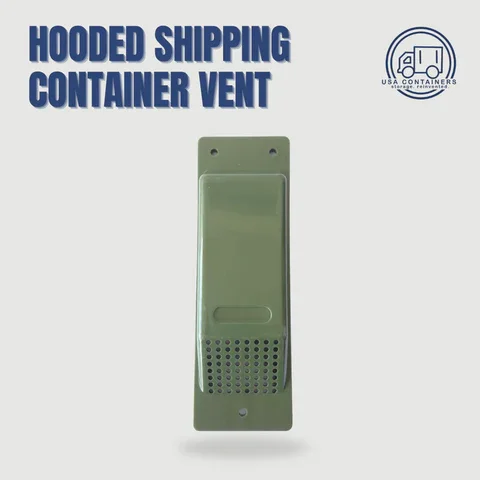
Hooded Shipping Container Vent
This is a durable, low profile passive vent that improves on the original factory style vents. It mounts directly into the container wall and allows airflow while blocking rain and debris.
This vent is a good choice if you want to replace rusted factory vents, increase airflow without electrical work, or install a budget friendly solution with a clean finish.
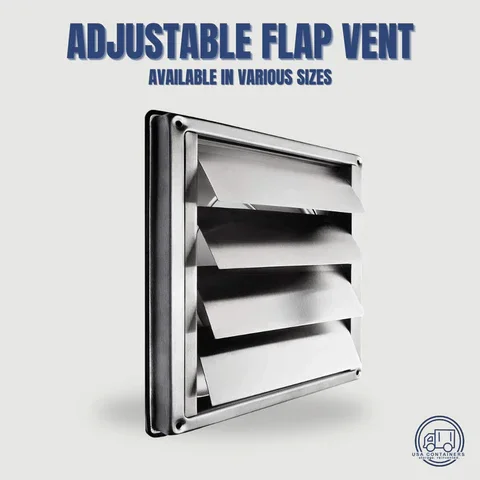
Adjustable Flap Vent
The adjustable flap vent provides more control over airflow. Gravity flaps open when air moves through and close when airflow stops. This helps keep the container weather tight during storms and reduces unwanted airflow during colder weather.
These vents are made from powder coated stainless steel and include a bug screen and rubber gasket to prevent leaks. They are available in multiple sizes and are easy to install.
This option works well as a passive intake vent near the bottom of the container, especially when dust, insects, or water intrusion are concerns.
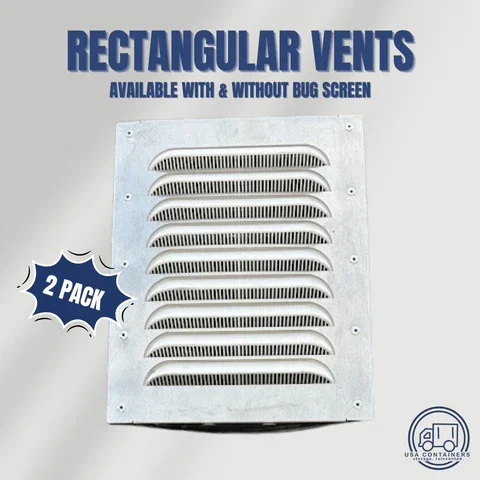
Rectangular Louvered Vents Two Pack
These heavy duty louvered vents are designed for high airflow. Each vent provides a large ventilation opening and is made from UV resistant material with an aluminum screen.
They are built to fit both corrugated and smooth sided containers and sit flush against the exterior. Installation is straightforward, with included templates and hardware.
These vents are ideal for workshops, humid storage, hot climates, or coastal areas where consistent airflow is needed.
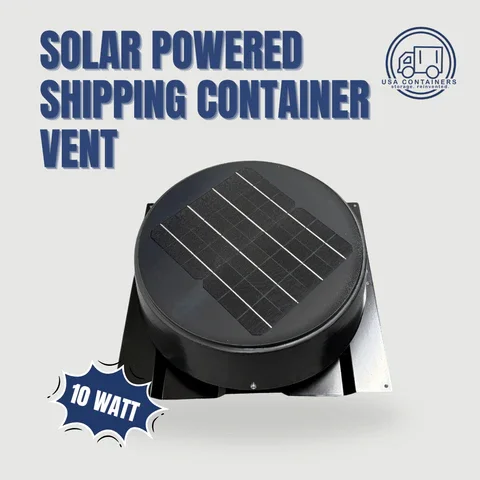
Solar Powered Roof Vent 10W
This solar powered roof vent operates independently without wiring or electrical hookups. Once installed on the container roof, it uses sunlight to pull hot air out, reducing interior temperatures and moisture buildup.
This vent is a strong option for container homes, offices, workshops, or any setup where heat control is important. It works especially well in sunny regions and requires very little maintenance.
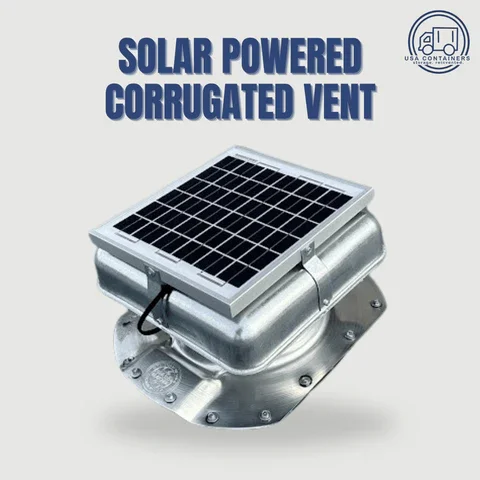
Solar RoofBlaster Vent
Designed specifically for shipping containers, this solar powered vent integrates the fan and solar panel into a single unit. The design helps prevent leaks and stands up to harsh weather conditions.
This vent is ideal for corrugated container roofs and users who want a plug and play ventilation solution to reduce heat and condensation.
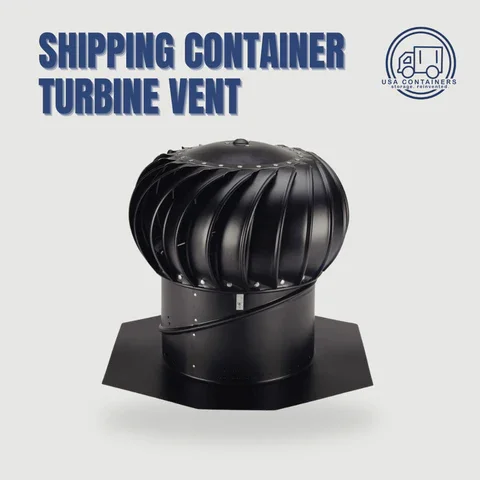
Twelve Inch Turbine Ventilator
The turbine ventilator uses wind power to pull hot air out of the container. As long as there is a breeze, it continues spinning and moving air without electricity or solar panels.
This option works well in breezy areas where you want continuous airflow with zero power requirements and minimal maintenance.
Ventilation Tips for Best Results
Use passive vents lower on the container and powered vents higher up. This creates natural airflow where cool air enters at the bottom and warm air exits at the top.
Choose the vent type based on how the container is used. Solar or turbine vents work best for workshops and living spaces. Flap or hooded vents are usually enough for general storage.
Do not rely on factory vents alone for long term use. They were not designed for climate control or daily occupancy.
Upgrade Your Container with Proper Ventilation
From simple passive vents to solar powered exhaust systems, USA Containers offers ventilation solutions for every setup and budget. Adding proper ventilation helps control heat, reduce moisture, prevent mold, and protect your container and everything inside it.
A few well placed vents can dramatically improve comfort, airflow, and long term durability.
